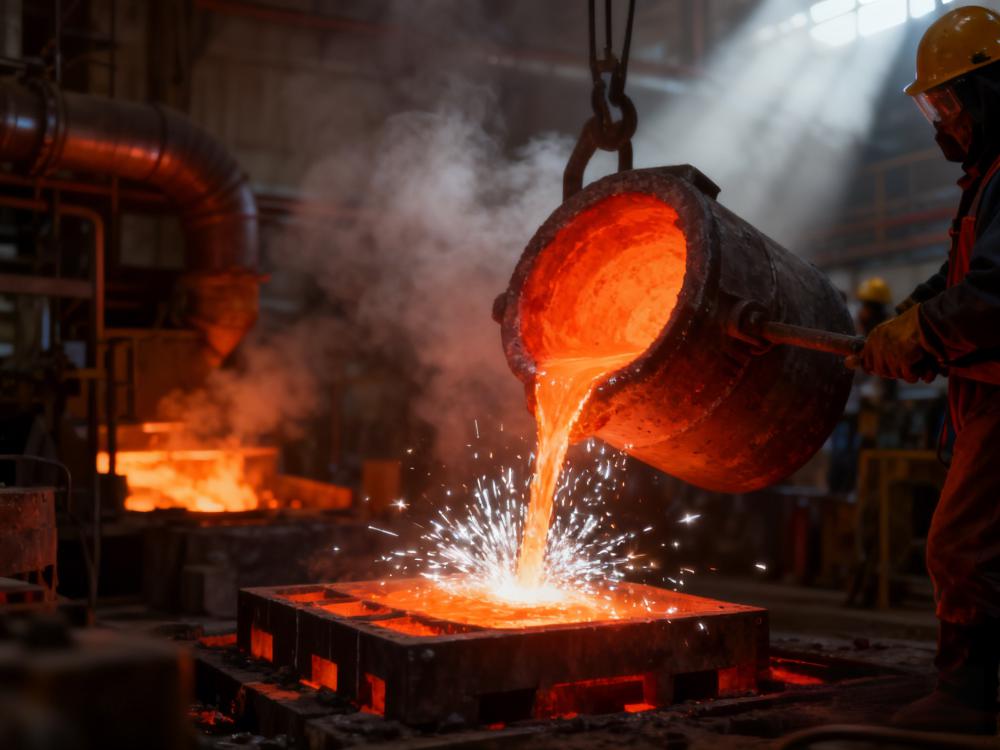
SHANGHAI, Mar 9 (SMM)—At the press conference on the development of industry and information technology held by the State Council Information Office on March 1, the Minister of Industry and Information Technology said that China's rare earth has been "sold at the prices of earth".
The news immediately drove the Northern Rare Earth's stock up to the daily limit, and Minmetals Rare Earth's stock approached the daily limit. Also, China Rare Earth in Hong Kong stocks rose more than 25%.
Due to vicious competition and competitive price reduction, the precious resources of rare earth have been wasted. At the same time, rare earth producers have caused many environmental problems. MIIT also pointed out that the low-level rare earth developments are in surplus, while high-level rare earth products are scarce, which is not conducive to technological innovation and technological progress. Chinese companies should learn from Japanese companies on the high-end R&D and application of rare earth.
"Earthly prices"
For a long time, there have been many problems in the development of China's rare earth industry, including increased ecological damage, serious environmental pollution, and excessive resource exploitation.
The mining of rare earth may destroy the vegetation on the surface of the mountain, and the injection of a large amount of ammonium sulphate into the mountain will also cause the water eutrophication, landslides, toxic gas, waste water and radioactive waste. Many rare earth mines in south China have been shut down for environmental protection.
However, China's rare earth pricing is seriously deviating from its value, and manufacturers in developed countries keep forcing prices down when placing orders, causing Chinese companies to compete to reduce quotations. As a result, the rare earth prices drop to the level of earth price. In 2018, China's total rare earth exports rebounded, but the average price was still lower than the 2014 level.
Surplus low-level development, scarce high-level development
China's ability in rare earth separation and smelting is in the world's leading position, but the technology research started late, and the technical patents have been obtained by foreign countries in many fields.
For example, in the field of permanent magnet materials where rare earth is most widely used, China has the largest production capacity, the leading technology of NdFeB, and the highest cost effectiveness. However, China does not have the technical patents. Hence domestic enterprises need to pay patent fees to produce permanent magnet motors, and the export volume is limited by the agreements.
It is reported that Japan has been developing rare earth since the 1980s and applied for core patents for the production of NdFeB in 1983. Hitachi Metals holds more than 600 patents worldwide, and almost monopolises all patents in the entire production process from NdFeB.
The overseas market of NdFeB is dominated by mid-to-high-end demand, while the domestic market is dominated by mid-to-low-end demand. Zhong Ke San Huan, Galaxy Magnets, Earth Panda, Zhenghai Magnetic Material, JL MAG Rare-Earth, and Ningbo Yunsheng have strong competitiveness in the field of high-performance magnetic materials.
SMM believes that with the gradual escalation of China's emphasis on rare earth as a strategic resource and the introduction of various policies, the rare earth industry will achieve high-quality development, and will alleviate the limitation on intellectual property.
For more information on the rare earth and rare earth markets, please subscribe to China Rare Earth Weekly.
![Rare Earth Prices Pulled Back, with Strong Wait-and-See Sentiment Downstream [SMM Rare Earth Weekly Review]](https://imgqn.smm.cn/usercenter/UXEpx20251217171743.jpeg)